PAYMENT OPTIONS

​

Forthcoming titles

(Book titles are subject to change)

Air War: East Africa WW1

Raf Russia, 1940

The Asc In Africa

South African Gunners

The Supernatural Ludwig Tieck

Wellingtons Men

Shuttle Bury Cobb & Danby Croker

King William’s War

The Supernatural Jerome K. Jerome


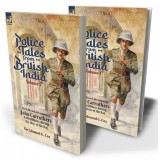
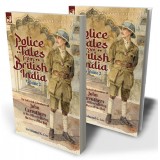
Police Tales from British India - Volume 1: The Collected Adventures of John Carruthers and His Officers during the Days of the Raj

enlarge Click on image to enlarge
enlarge Mouse over the image to zoom in
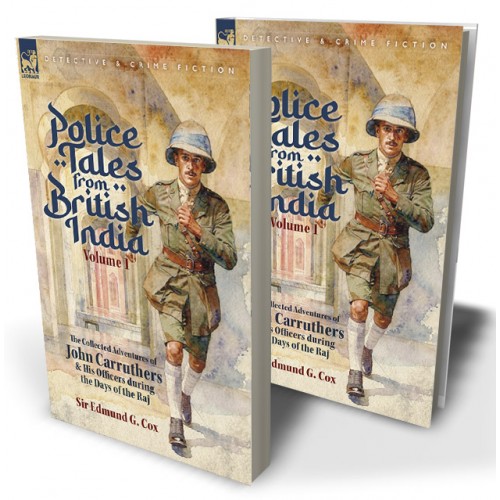
Police Tales from British India - Volume 1: The Collected Adventures of John Carruthers and His Officers during the Days of the Raj
Qty:     - OR -   Add to Wish List

Author(s): Sir Edmund G. Cox
Date Published: 2026/08
Page Count: 272
Softcover ISBN-13: 978-1-918436-11-2
Hardcover ISBN-13: 978-1-918436-10-5

The first volume of fictional tales of crimes and investigations from the sub-continent

The author, Sir Edmund Charles Cox was a British colonial police officer and author who served in India during the height of the British Raj. Born on 27 February 1856 and arriving in the sub-continent in 1876, he joined the Bombay District Police rising to become the Deputy Inspector-General of Police for the Bombay Presidency. He spent over thirty years in active service. Cox utilized his real-world police experience to pen fascinating and exotic, Victorian era, Anglo-Indian detective fiction and crime stories which are contained within three key collections: 'John Carruthers: Indian Policeman'; operating across the Bombay Presidency, dubbed "the Sherlock Holmes of India", Carruthers matches his wits against dacoits, counterfeiters, ritual poisoners and practitioners of witchcraft among other criminals .'The Achievements of John Carruthers' is a  sequel collection of tales. The final collection, 'The Exploits of Kesho Naik, Dacoit', concerns the exploits of a clever outlaw, within which characters introduced in other stories also make an appearance. This two- volume Leonaur edition combines all three books for good value and because the contents readily form a common theme and cast of characters.

Leonaur editions are newly typeset and are not facsimiles; each title is available in softcover and hardback with dustjacket.

“What has happened, Sir John?” said Pixley, who rushed towards us at that moment. “Has Miss Le Marchant gone?”
“She is gone,” I replied. “The third pig has done its work. I cannot explain now, Thornhill; Pixley understands. The only thing is to follow instantly.”
But we could not follow instantly. The horses had been unharnessed from the carriages that had brought the guests; and ten minutes elapsed, which to us seemed hours, before a mail phaeton, with a fine pair of horses, turned up. I leaped on the box, seized the reins, and with Pixley at my side, started in pursuit of the hansom. It was a bright moonlight night, and we could see as well as if it were day.
“How do you know which way she has been taken?” asked Pixley.
“I have very good reason to guess where she has been taken and why,” I responded. “I have not spent my time in idleness since this morning. ‘Wheels within wheels!’ is a mild expression for the devilish machinery that is in motion. I was on the look-out for a stroke, but the rapidity of the action is disconcerting. Fear not, I am on the track. See,” I said, as I drew up for a moment at four cross roads, “Miss Le Marchant has kept her head. Look at that glove on the road in front of us. On we go.”
At another turning her second glove showed us the way to take; and, at two more, fragments of her fan were unerring guides.
“I thought so. I felt sure of it,” I said, as the last fragment of her exquisite lace fan met our eyes when we turned from a cross-country lane on to the main road to Red Hill. “We have a long journey before us. England was not safe enough. I hope you are a good sailor, Pixley, for we have to cross the channel. I fear Miss Le Marchant will suffer. Do not ask me to explain now. Trust in me. We may yet catch the last night train for Newhaven.”
Pixley groaned, but had the sense to refrain from questions. On and on we went; but the horses, unaccustomed to the pace at which I had driven them, showed unmistakable signs of flagging. Our speed, in spite of my efforts, grew less and less.
It was half-past two when we reached Ked Hill, and the Newhaven train had left. Yes, a sleepy porter told us in answer to our inquiries, a lady in a long cloak had arrived in a hansom just before the departure of the train; she was met by an old lady and a middle-aged man, whose appearance he was unable to describe, and had been hustled, apparently in a half-dazed condition, into a first-class compartment that was labelled reserved.
You may also like