PAYMENT OPTIONS

​

Forthcoming titles

(Book titles are subject to change)

Air War: East Africa WW1

Raf Russia, 1940

The Asc In Africa

South African Gunners

The Supernatural Ludwig Tieck

Wellingtons Men

Shuttle Bury Cobb & Danby Croker

King William’s War

The Supernatural Jerome K. Jerome


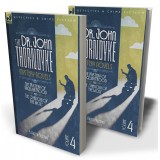
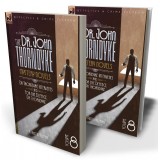
The Dr. Thorndyke Mystery Novels Volume 1 - The Red Thumb Mark and The Eye of Osiris

enlarge Click on image to enlarge
enlarge Mouse over the image to zoom in
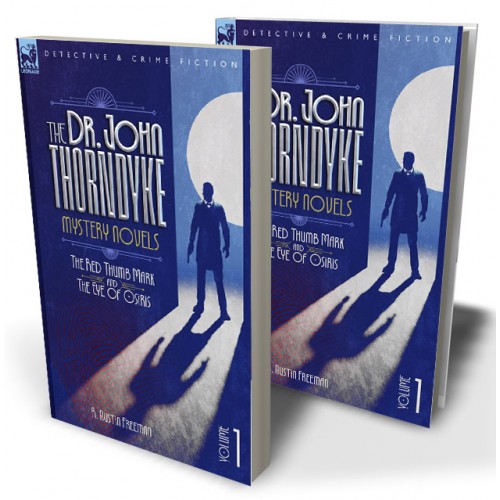
The Dr. Thorndyke Mystery Novels Volume 1 - The Red Thumb Mark and The Eye of Osiris
Qty:     - OR -   Add to Wish List

Author(s): R. Austin Freeman
Date Published: 2026/02
Page Count: 408
Softcover ISBN-13: 978-1-917666-57-2
Hardcover ISBN-13: 978-1-917666-56-5

Volume 1-Two novels featuring the Edwardian doctor detective

The author of this special Leonaur collection of the detective story novels, featuring Dr. John Thorndyke was, in fact, a physician himself, Dr. Richard Austin Freeman, (1862-1943). This eleven volume set of the longer stories of the 'Thorndyke' casebook has been introduced to complement the previously published Leonaur three volume collection of Thorndyke short stories. Shortly after Freeman qualified as a doctor, he volunteered for colonial service as a surgeon in West Africa and was involved in several dramatic incidents of the period. After he was invalided back to the UK he became a general medical practitioner, followed by a period in the Prison Service. Shortly afterwards his writing career accelerated until his literary output was, and remained for his entire life, prodigious. The first 'Thorndyke' story was published in 1907 and this Leonaur collection- featuring two novels per volume- has been collated chronologically. Although most modern readers are familiar with contemporary terms for the same activities, the pioneering Thorndyke is described as a medico-legal forensic investigator.Freeman's own background enabled him to ensure the scientific elements involved in his novels were authentic. Indeed, Freeman undertook verifying experiments to confirm their viability.Naturally, both Freeman and his most renowned character have become the focus of much attention by critics and enthusiasts of the detective fiction genre. Perhaps inevitably, comparisons, for several legitimate reasons, have been made to Sherlock Holmes. Some have observed that whilst Doyle was possibly the superior writer of entertaining tales,Thorndyke was-based on authentic science- the better detective. Be that as it may, readers may be assured that Thorndyke stories continue to be universally lauded as among the finest examples of the Edwardian detective fiction. Volume one includes,' The Red Thumb Mark' and ,'The Eye of Osiris'.

Leonaur editions are newly typeset and are not facsimiles; each title is available in softcover and hardback with dustjacket.
‘This has been a neatly executed job,’ he remarked; ‘none of your clumsy hacking with a chopper or a saw. The bones have been cleanly separated at the joints. The fellow who did this must have had some anatomical knowledge, unless he was a butcher, which, by the way, is not impossible. He has used his knife uncommonly skilfully, and you notice that each arm was taken off with the scapula attached, just as a butcher takes off a shoulder of mutton. Are there any more bones in that bag?’
‘No, sir,’ replied the labourer, wiping his hands with an air of finality on the posterior aspect of his trousers; ‘that’s the lot.’
The surgeon looked thoughtfully at the bones as he gave a final touch to their arrangement, and remarked:
‘The inspector is right. All the bones of the neck are there. Very odd. Don’t you think so?’
‘You mean—’
‘I mean that this very eccentric murderer seems to have given himself such an extraordinary amount of trouble for no reason that one can see. There are these neck vertebrae, for instance. He must have carefully separated the skull from the atlas instead of just cutting through the neck. Then there is the way he divided the trunk; the twelfth ribs have just come in with this lot, but the twelfth dorsal vertebra to which they belong was attached to the lower half. Imagine the trouble he must have taken to do that, and without cutting or hacking the bones about, either. It is extraordinary. This is rather interesting, by the way. Handle it carefully.’
He picked up the breast-bone daintily—for it was covered with wet mud—and handed it to me with the remark:
‘That is the most definite piece of evidence we have.’
‘You mean,’ I said, ‘that the union of the two parts into a single mass fixes this as the skeleton of an elderly man?’
‘Yes, that is the obvious suggestion, which is confirmed by the deposit of bone in the rib-cartilages. You can tell the inspector, Davis, that I have checked this lot of bones and that they are all here.’
‘Would you mind writing it down, sir?’ said the constable. ‘Inspector Badger said I was to have everything in writing.’
The surgeon took out his pocket-book, and, while he was selecting a suitable piece of paper, he asked: ‘Did you form any opinion as to the height of the deceased?’
‘Yes, I thought he would be about five feet eight’ (here I caught the sergeant’s eyes, fixed on me with a knowing leer).
‘I made it five eight and a half,’ said the police surgeon; ‘but we shall know better when we have seen the lower leg-bones. Where was this lot found, Davis?’
‘In the pond just off the road in Lord’s Bushes, sir, and the inspector has gone off now to—’
‘Never mind where he’s gone,’ interrupted the sergeant. ‘You just answer questions and attend to your business.’
You may also like