Author(s):
An O. E. (G. P. A. Fildes) Date Published:
2009/07 Page Count:
328 Softcover ISBN-13:
978-1-84677-745-5 Hardcover ISBN-13:
978-1-84677-746-2
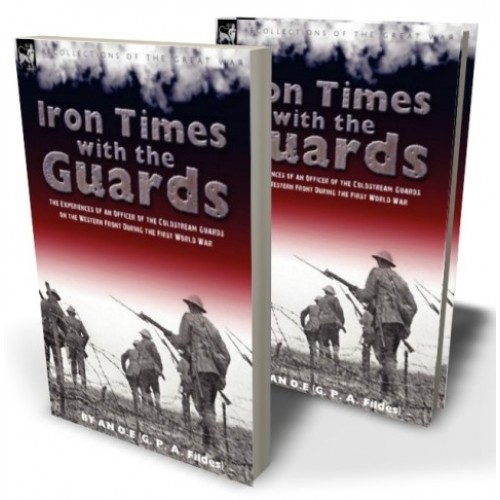
There are several accounts of the experiences of men during the Great War which have been recognised as exceptional, have been highly acclaimed and have entered the ranks of classic war literature. There are many more eyewitness accounts of more humble literary reputation which are nevertheless still invaluable as historical chronicles. These inevitably become—in most cases—less well known. Rarely does one discover a work—probably unknown to many—that is all one could hope for as a memoir of a life lived during wartime but which at the same displays the craft of penmanship, the sensitivity, creativity and depth of observation of places, events and personalities that defines great writing. This book—the experiences of an officer of the Coldstream Guards on the Western Front—is such a book. Scenes of life behind the lines, in the trenches and during the assault of battle are graphically related making it a truly indispensable volume for anyone interested in the war the infantry knew. Highly recommended.
After midday, the gunfire having quite subsided, I went up to the front line to view the effects of the morning’s bombardment. A number of slight casualties were coming back to the dressing station located in the village, while farther along the communication trench lay several stretchers, whose loads, covered from head to foot with ground-sheets, told their own tale. Here and there along the front line, progress was checked by great landslides of earth and torn sandbags, marking the spot where a shell had overthrown our parapet. The men were all seated in the shelters and had evidently received orders to remain there. Lying about in numerous spots were clusters of shattered rifles, British and German, many without a butt, a few twisted into weird shapes by the force of an explosion. Burst packs, German entrenching spades, “hair brush” bombs, and fragments of grey uniform; tins, twisted bayonets, and boots, lay scattered in all directions: here was the flotsam and jetsam of a modern battle field. And everywhere, gluing the whole medley of litter into a boundless pudding, stretched the mud of Flanders. <br>
I had not proceeded very far through this wilderness before the arrival of another shell a short distance behind me caused me to stop; apparently there was to be no peace for the front line that day. Another shell followed a few minutes later, so I decided to run the gauntlet of any further fire and to regain the communication trench by which I had come.<br>
Most of the afternoon passed amid a constant harassing fire of shrapnel, in whose manner of arrival there seemed to be some sort of artful method. A solitary shell would burst harmlessly in the air at a fair height, and a few minutes later, when the unwary might be supposed to have emerged to see the results of its explosion, a Whizz Bang would flash below the drifting smoke of the first and scatter its hail of missiles around. This trick, however, was too well known to the majority of the men to meet with much success.<br>
Toward evening, during a lull of some duration, the work of evacuating the dead and wounded began. The latter were no longer “walking cases,” for the reason that all men of this category had already made their own way back in the course of the day.<br>
It was a sad procession that threaded its way presently past our reserve trench. The supply of ground sheets had run out, so it was often upon terrible sights that we gazed as the stretcher-bearers filed slowly past. Here was other wreckage of war: human beings, many still conscious and nauseatingly repulsive in spite of their first-aid dressings. These, often soaked by blood, served only to emphasise the mangled wounds which they concealed, but did not hide. In spite of the care shown by the stretcher-bearers, an occasional groan would escape from the wounded man whom they carried. One fellow, borne by unconscious, kept up a continuous moan until out of earshot. Fine upstanding fellows only a few hours before, these pitiful wrecks were now hideously injured carcases: Kanonen Futter. Then in due course, swaying limply to the motion of their reeking stretchers, wrists tied across their breasts to prevent their arms from falling over the side, came the dead.
********
“I’m very sorry, sir, indeed—your periscope stick is broken.” This I had lent to him half an hour before.<br>
“How was that, sergeant?” I asked in some surprise.<br>
“Cut in half, sir, before I had put it up five seconds. I never saw such a shot.”<br>
A man standing by handed me the broken halves. Sure enough, when joined together, the stick revealed a bullet hole in its centre, about half-way up it.<br>
“You were exposing it too much, I am afraid. No need to show more than the top mirror. I’m sorry, sergeant. It was useful at times, but it cannot be helped. Have you any idea where the shot was fired from?”<br>
“Yes, sir, I’m waiting for him. I’m very sorry indeed,” he added. His concern was evident.<br>
An instant or so later, just as I was in the act of turning away, I noticed him jerk forward his head as if he had located something in the mirror. What happened next was done in a moment: a most remarkable performance in its way.<br>
Grasping a rifle that leant beside him against the parapet, the sergeant leapt to his feet, thence to the fire-step where he had been seated; then, flinging the rifle across the parapet, he fired a snapshot, paused for a second, and ducked. Almost before I had realised what he had done, he was standing beside me in the trench, a broad grin upon his face.<br>
“Nabbbed ‘im! I’ve been waiting for him—got a notion he broke your stick.” A delighted chuckle escaped from one of the men, who had jumped to the “vigilant.”<br>
“The sergeant ‘as given ‘im the knock-out, sir. I can see the bloke all right; proper stiff ‘e is.”<br>
There, reflected in the mirror, I saw the head and shoulders of a German fully exposed across the parapet opposite, about thirty yards off. One arm, I noted, was flung across the top of the sandbags. Indeed it was a wonderful shot. Sergeant Buck beamed with joy, and my words of congratulation seemed to banish from his mind any lingering recollection of my loss. Like wild-fire, the news of this performance sped down the trench, and as it went, an idea came to me.<br>
“Send off for a box of Mills, sergeant; tell them to run like mad!”<br>
“ Sir!” came his instant reply. A moment later a man vanished down the trench toward a bomb store.<br>
“We are going to improve on this occasion. I’ve got five casualties to square.”<br>
He now saw my idea, and his grin reappeared once more.<br>
“Tell Corporal Thomason from the officer to double along here.” Thus he anticipated my plans. Another form vanished at his bidding, whereon I returned to my place at the mirror. Rapid footsteps soon announced the arrival of the bombs and of the Bombing Corporal.<br>
“Stand by, corporal, with these fellows. You all understand these things. Chuck together on the word, straight to your front over those near sandbags—range, thirty-five yards.”<br>
One by one the safety pins were extracted, and the four took up their stand in readiness to throw.<br>
“See that you all have room behind you,” I ordered.<br>
About five minutes later I fancied the body moved slightly.<br>
“Throw!”<br>
My voice was followed by the clicks of the released bombs as they flew into mid-air. Then came a pause, ended by a volley of loud reports. One had fallen short, another had gone over, but two, I believed, had landed right into the German trench. “Fritz” still lay where he had fallen; apparently Heinrich and Hans had ceased to drag him in.<br>
“Get ready again.”<br>
As I watched in the mirror, a queer idea occurred to me. “Fritz” seemed strangely exposed.<br>
“What could you see when you fired, sergeant?” I called over my shoulder.<br>
“Most extraordinary, sir. He was standing there a-showing himself down to the waist: I saw his ammunition pouches. Looking around quite quiet like, he was, sir—taking the air, so to speak.”<br>
“They seem to find things pretty comfortable over there!”<br>
“Looks like it, sir. Anyway, one of ‘em has gone to sleep all right.”
********
A heavy explosion shook the ground as the nearest man to me leapt the sandbags: a shell had landed within ten yards of us. Then, in response to a signal, platoon after platoon clawed its way over, and presently, in a long extended line, crouched in the long grass outside the trench. A loud blast on a whistle and a slow gesture galvanised them into motion. A murmur of sound arose as the line surged to its feet. Silent and grim, it faltered an instant. No cheer was heard. A line of swaying flashes rippled along our front as the sun gleamed brightly on a hundred bayonets.<br>
“Forward, the Goalies!”<br>
Above the clank of accoutrements and the swish of trampled grass, the solitary cry rang like a bugle call. Flitting overhead, the hum of many bullets filled our ears; others, nearer still, careered past with the crack of a whiplash. Swerving and jumping, we cleared the bodies of numerous grenadiers huddled in the grass of No Man’s Land. Some still moved and even called to us, but we could not stay. Ahead of us, running in a straggling maze of wire and riven sandbags, lay the enemy’s front line.<br>
Our feet laboured and pounded with the futility of a nightmare: we seemed glued to one spot. At last, as we drew near the remains of their entanglements, the bodies of our comrades grew thicker, and over them a ghost-like figure drifted toward us. It was a German, who, with uplifted arms and blubbering face, mouthed a terrible appeal. A moment later, in response to an abrupt gesture, he plunged headlong through our ranks, clasping his shaking hands above his head and weeping with uncontrollable relief. Bunched here and there in tangled heaps, the wire lay scattered across a chaos of shell-holes, and from it, hanging in splintered fragments, protruded the remains of many stakes. Through this we stamped our way onward; here on every side lay numbers of dead guardsmen, In the trench no sign of life was visible: the leading wave had already passed on. Into it I now jumped, a glance sufficing to show how thorough their work had been, for lying stark and bloody on either hand were swathes of our enemies on to which the leaping figures of our line were now descending.<br>
Shouting, swearing, and slipping, they tumbled into the trench like an avalanche and darted to and fro in quest of a quarry. But in this we were baulked, because no living soul remained. Running over a human carpet, one directed the N.C.Os to reorganise their men. Of the grenadiers, no traces were visible; evidently they had already neared the second objective. They had suffered considerable casualties.<br>
All too soon the time arrived for us to be moving forward, since, if we were to catch up our time-table, only a short delay was permissible. Rapidly word was passed along, and the men commenced to gather up their rifles and spades, which had been issued to provide means for entrenching in our final objective. Bullets were still coming over as we scrambled out of the captured trench, but in no great volume: a fact that seemed a good omen. Striding forward through the long grass, one could observe the admirable appearance of the company as it swept on once more.<br>
“You’d have thought it was an ordinary field-day, sir!” Sergeant Repton, accompanied by a couple of men, came up beside me. He seemed in the seventh heaven of delight.<br>
Nothing obstructed our advance, no sign of friend or foe was to be seen, but presently, as we approached the Diagonal Road, a cluster of grey uniforms arose from its hollow. Pausing irresolutely at the sight of our approach, they next ran forward to meet us, hands in air and whimpering continuously. Their terrified expressions were eloquent of what they had been through, and upon more than one, Lyddite fumes were smeared like mustard powder. These creatures were obviously half demented by fear and shell shock, therefore we merely jerked our thumbs over our shoulders and passed on. A moment later, the long cavity of the Diagonal Road gaped before us.<br>
Down its steep bank poured the noisy torrent of men, who, with bayonets advanced, peered left and right for sign of a possible foe. Upon the littered surface of the roadway sprawled a considerable number of dead Germans, among whom were scattered a few patches of khaki. Here, as in the trench behind, the grenadiers had left a trail of slaughter.<br>
As we had anticipated, the near bank proved to contain a number of dugouts, so toward these we hurried. One after another we passed them, until a sudden shout arrested my attention. Looking sharply in the direction of a levelled rifle, I beheld a grey figure stooping in the entrance we had just passed. His hands were unraised. To jerk forward my revolver and fire was an act of instinct. The fellow shook with a sudden spasm, flinched as from a heavy blow, then subsided in a heap across the threshold. Whether he was dead or not, we could not stop to ascertain; at all events he would trouble us no more.<br>
Satisfying ourselves that no one remained to work us mischief from behind, the company, still preserving its long irregular line, scrambled up the farther bank. There, in full view, the village confronted us. Then for the first time did the men give tongue! A roar of cheers broke from us all. In front lay our objective, held by a reeling enemy!<br>
Charging down the slope, we felt our blood rise at the thought of the supreme moment that had come. Laughing and shouting, the company gathered speed as it rolled forward, one section chaffing another on account of its laggards. Yard by yard the high-standing grass and looming craters swept behind us as, jumping and tripping in our stride, we streamed onward. Every moment now I expected to hear a racket of machine-gun fire; but none came. The village remained silent. Shrill above the hubbub of our onrush rose the sergeants’ voices, steadying the eager and calling upon the stragglers. Soon, before us loomed a disordered waste, churned by shell-fire and strewn with splinters, behind which stretched another sunken road. We had reached the Brown Line.<br>
There, clustered along the farther bank, lay groups of khaki figures, which, at the sound of our halt, turned their heads in our direction. By the red flashes on their sleeves one knew them for grenadiers. A moment later they became invisible as we, panting from our exertions, subsided into the surrounding craters. Here the tempest of gunfire dinned in our ears once more, for now we were close to our own barrage. Right and left, grimy faces smiled over the edges of neighbouring holes.

 your wishlist
 your account


 Click on image to enlarge
 Mouse over the image to zoom in