PAYMENT OPTIONS

​

Forthcoming titles

(Book titles are subject to change)

Air War: East Africa WW1

Raf Russia, 1940

The Asc In Africa

South African Gunners

The Supernatural Ludwig Tieck

Wellingtons Men

Shuttle Bury Cobb & Danby Croker

King William’s War

The Supernatural Jerome K. Jerome


The Dr. Thorndyke Mystery Novels Volume 3 - Helen Vardon’s Confession and The Cat’s Eye

enlarge Click on image to enlarge
enlarge Mouse over the image to zoom in
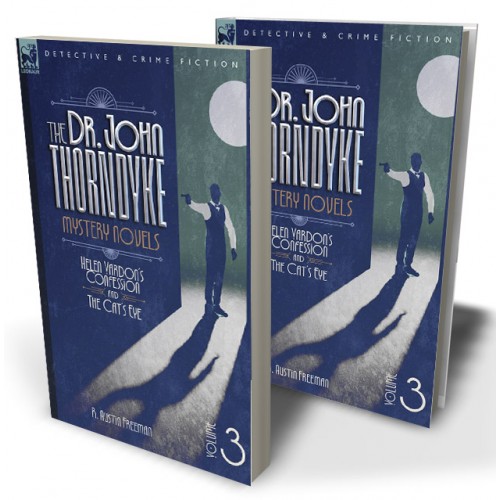
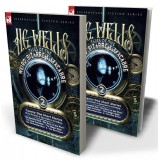
The Dr. Thorndyke Mystery Novels Volume 3 - Helen Vardon’s Confession  and The Cat’s Eye
Qty:     - OR -   Add to Wish List

Author(s): R. Austin Freeman
Date Published: 2026/02
Page Count: 528
Softcover ISBN-13: 978-1-917666-61-9
Hardcover ISBN-13: 978-1-917666-60-2

Volume 3-Two more mystery novels featuring Dr Thorndyke

The author of this special Leonaur collection of the detective story novels, featuring Dr. John Thorndyke was, in fact, a physician himself, Dr. Richard Austin Freeman, (1862-1943). This eleven volume set of the longer stories of the 'Thorndyke' casebook has been introduced to complement the previously published Leonaur three volume collection of Thorndyke short stories. Shortly after Freeman qualified as a doctor, he volunteered for colonial service as a surgeon in West Africa and was involved in several dramatic incidents of the period. After he was invalided back to the UK he became a general medical practitioner, followed by a period in the Prison Service. Shortly afterwards his writing career accelerated until his literary output was, and remained for his entire life, prodigious. The first 'Thorndyke' story was published in 1907 and this Leonaur collection- featuring two novels per volume- has been collated chronologically. Although most modern readers are familiar with contemporary terms for the same activities, the pioneering Thorndyke is described as a medico-legal forensic investigator.Freeman's own background enabled him to ensure the scientific elements involved in his novels were authentic. Indeed, Freeman undertook verifying experiments to confirm their viability.Naturally, both Freeman and his most renowned character have become the focus of much attention by critics and enthusiasts of the detective fiction genre. Perhaps inevitably, comparisons, for several legitimate reasons, have been made to Sherlock Holmes. Some have observed that whilst Doyle was possibly the superior writer of entertaining tales, Thorndyke was-based on authentic science- the better detective. Be that as it may, readers may be assured that Thorndyke stories continue to be universally lauded as among the fi nest examples of the Edwardian detective fiction. Volume three includes,' Helen Vardon’s Confession' and ,'The Cat’s Eye'. 

Leonaur editions are newly typeset and are not facsimiles; each title is available in softcover and hardback with dustjacket.

As I reached the corner of Scoresby Terrace and looked at the corner house, my heart seemed to stand still. A single glance showed that it was an empty house, and the horrible desolation of its aspect was made more dreadful by the silence and the total absence of any sign of life. I flew across the road, and barely glancing at the number-twenty-nine-raced up the garden path and tugged furiously at the bell.
Instantly the hollow shell reverberated with a hideous jangling that sounded more ominous and dreadful from the vacancy that the discordant echoes bespoke. But it slowly died away and was succeeded by no answering sound. A deadly silence enveloped the ill-omened place. Not a creak upon the stair, not a sign of life or movement could I detect, though I held my breath to listen. Yet this was the house, and she was in it—and that other! Again I wrenched at the bell, and again the horrible jangling filled the place with echoes, like some infernal peal rung by a company of ghouls. And still there was no answer.
In a frenzy of terror I rushed down the side passage, and bursting open the flimsy gate, ran into the back garden and tried the back door. But it was locked and bolted. Then I darted to the back parlour window, and springing on the sill, shattered, with a stroke of the chisel, the pane above the catch. Passing my hand in through the hole, I drew back the catch and slid up the lower sash. I had noticed that the wooden shutters were not quite closed, but at the moment that I slid up the window-sash, the shutters closed and I heard the cross-bar snap into its socket.
For a moment I had a thought of running round to the front and breaking in the street door. But only for a moment. Rescue, not capture, was my purpose. A glance at the flimsy, decrepit shutters showed me the way in. Thrusting the edge of the long, powerful chisel into the crack close to the lower hinge, I gave a violent wrench, and forthwith the hinge came away from the jamb, the screws drawing easily from the rotten woodwork. Another thrust and another wrench at the upper hinge brought that away too; at a push the whole shutter swung inward and I sprang down into the room. And at that moment I heard the street door shut.
I ran across the room to the door. Of course it was locked and the key was outside. But I was not a criminal lawyer for nothing. In a moment I had the chisel driven in beside the lock, and pressing on the long handle, drove the door back on its hinges, when the lock-bolt and latch disengaged from the striking-plate and the door came open at once.
I ran out into the hall, unlocked the front room, and looked in, but it was empty. Then I flew up the stairs and was about to unlock the door of the first room that I came to, when I became aware of a soft, shuffling sound proceeding apparently from the next room. Instantly I ran to that door, and turning the key, flung it open.
The sight that met my eyes as I darted into the room was but the vision of a moment, but in that moment it imprinted itself upon my memory for ever. Even now, as I write, it rises before me, vivid and horrible, with such dreadful remembrance that my hand falters as it guides the pen. In a corner near the wall she lay—my sweet, gracious Winifred-lay huddled, writhing feebly and fumbling with her hands at her throat. Her face was of the colour of slate, her lips black, her eyes wide and protruding.
You may also like