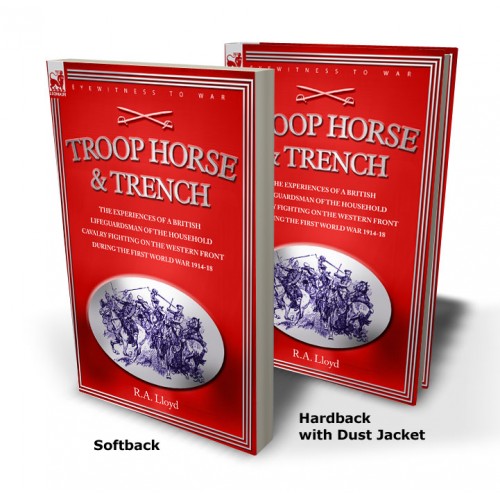
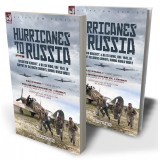
Warfare in the 'Twilight Days' of the British Cavalry For those who imagined that the role of the cavalry on the Western Front was a passive one waiting for the opportunity to put the ‘Gee’ in ‘Gap’, this book will be a revelation. After a brief period of traditional cavalry operations in the opening months of the war, the Household Cavalry took its part in the gruelling trench warfare that typified the British effort in Belgium and France. The author - a regular serving soldier - provides a vivid and entertaining account of cavalry life in the pre-war period, action against mounted Uhlans and of his experiences in the front line under rifle fire and bombardment.
We were now definitely at grips with the outer fringe of the enemy. As we ourselves corresponded to this fringe, inasmuch as we were the feelers, eyes, and ears of the British force in this locality, brisk skirmishes with bodies of Uhlans were of frequent occurrence. The latter were shy of coming to close quarters, and, taking them all in all, not very likeable customers. In their methods they resembled prowling packs of wolves rather than soldiers. Hereabouts the country was a patchwork of villages, all connected up by light railways which ran along the roadsides. The trains were still running, and a favourite trick of the Uhlans was to leave their horses somewhere handy just outside, then board the next train and enter the village,where they terrorized the inhabitants, cut telegraph and telephone wires, looted the shops, and played up general old merry hell.
A patrol of ours, consisting of ‘C’ Squadron, had several small engagements on the 14th. They discovered the village of Gheluwe occupied by German cavalry, and promptly rushed it with two troops dismounted. A lively five minutes followed. This form of village fighting was particularly nasty, as the bullets ricochetted off the cobblestones and performed ugly tricks. Soon the party of Uhlans was wiped out, all except two. One of these managed to reach his horse, sprang into the saddle, and galloped away. He went tearing along a straight road at full speed, and was gradually becoming a mere speck in the distance, when Sergeant Johnny Arthurs of the Skins took his rifle, sighted it at twelve hundred yards, and shot the Uhlan dead.
The second one took to running across country and was pursued by the Hon. Gerald Ward and a couple of mounted men. Soon he stopped, raised his carbine, and aimed straight at the officer. As the latter rode direct at him, he changed his mind, threw the gun down, and put up his hands. A wild fellow, named Bellingham, of the ‘Skins,’ galloped at him and ran him through the body with his sword. He then calmly wiped his sword on his horse’s mane and remarked: “That’s the way to serve them bastards.” Those present were shocked at the coldbloodedness of the deed, but there was some weight in the remark which followed it. At any rate, what might have been a nasty business for Master Bellingham was suffered to pass unheeded.
Casualties now began to be frequent, and no day passed without one or another of my old friends being killed. Bill Leggett was the first to go.
We remained about Groote Vierstraat till the morning of 16 October. I have no recollection of a village there, but I remember distinctly an inn, or bierhuis, opposite a large sugar factory. At the inn the Uhlans had behaved like wild beasts the day before we arrived there. Here we happened to be quite close to the Composite Regiment of Household Cavalry containing our Squadron which had left Knightsbridge on 15 August. Our officers motored over to see them, but they were still too far away to permit of an exchange of visits between the other ranks.
On the morning of the 16th we marched via Ypres to Poelcappelle. On the way one Squadron had news that a strong party of German cyclists was moving towards them. The Squadron dismounted and lined a hedge alongside the road in order to trap them. Suddenly a solitary Belgian soldier on a bicycle came up from the opposite direction and ran slap into the Germans lound the corner. He sprang from his bike, fired into their teeth, then mounted and scooted back like the wind. The Germans, to our great disgust, turned tail and must have tried another route.
Once or twice during a halt outside a small village between Poelcappelle and Passchendaele we heard the report of a rifle close at hand. Thinking it was some idiot who had fired his rifle accidentally, we took no notice of the first report. But as the firing was repeated, and in the end somebody was hit, we could only come to the conclusion that we were being sniped. A search of the surrounding gardens was made, and two young men, apparently Belgian civilians, were caught red-handed. They had been keeping up the appearance of working in a garden a short distance from the road, and they were varying the monotony of gardening by taking pot-shots at us with a mauser rifle when an opportunity offered. I saw them marched away under escort, and a surly, square-headed pair they looked.
In the same village I could scarcely believe my own eyes when I saw a bent old man, about eighty years of age, hobble out from his house and cut our telephone wires which were laid past his door. We hustled him back into his cottage, closed the door, and the wires were repaired. Out he came to cut them again; so he, too, was arrested and marched away towards Ypres after the other two.Round the next bend I met Gus Russell of my old Troop. He was limping along carrying a machine-gun tripod. He was glad to see me, and told me the shelling had been fierce and had played havoc with the trenches. His machine-gun had been hit and put out of action. Old Doctor Holmes, the Machine-gun Sergeant-Major, a fine fellow, had been killed when the gun was hit. In the midst of this havoc the Germans came over in masses, and by sheer weight of numbers had gained a footing in our trenches, which had been almost obliterated by the shelling.
I took the tripod from Gus and we went back together, I riding and he hanging on to my stirrup-leather. I felt a fool at being out in the horse-lines while my comrades were in the thick of it, but it was not my fault. I should have been there right enough if there had been room for us when the relief took place. I realize now it was just my luck.
As the day wore on, we outsiders were not called upon. There were a mere sixty of us, so I suppose we were forgotten. Bit by bit the details of the battle leaked down to us with the wounded men. We could, scarcely credit these reports till, at dusk, the survivors hobbled back to the horse-lines on being relieved by the Foot Guards.
They looked bedraggled and weary to death as they marched in. Sinbad the Sailor, covered in mud, and with a rifle slung over his shoulder like a Tommy, walked alone at the head of what remained of his Troop. His Troop Sergeant, Cabby Dawes, had been wounded in the first bombardment, and as somebody tried to carry him back he had been hit again and killed. Sinbad and Cabby were kindred spirits and inseparable at all times. Neither had any thought for himself. Their horses were never short of forage, nor their men of rations. Better soldiers than those two and their Troop of scallywags and hard cases did not exist.
Both ‘A’ and ‘D’ Squadrons had sustained losses, but ‘C’ Squadron had, with the exception of Charlie Wright and six or seven men, been absolutely wiped out. Charlie and his little bunch were not in the same section of line with their Squadron, but in close touch with ‘D’ Squadron. When the order to retire was given it did not reach the main body of ‘C’ Squadron owing to its position being slightly detached from, and in front on the left of, the rest of the Regiment. Lord Hugh Grosvenor, ‘C’ Squadron Leader, was not the man who would retire without orders, so they just fought it out and died where they stood. No trace of Lord Hugh and his hundred-odd men was ever found.
An attempt was actually made, when the situation was realized and when, incidentally, it was too late, to get the order through from a trench on the left of ‘D’ Squadron. Here a handful of transport drivers were holding out under the command of a venerable officer called ‘Santa Claus.’ A man volunteered to go across to ‘C’ Squadron, but was killed before he got half-way. Another who went immediately after him met with the same fate. A cat could not have crossed that piece of ground with a whole skin just then. Bogey Giles, who was in this trench, relates an interesting argument between Santa and Driver Tapper. Santa, feeling the weight of his responsibility, decided to send a third runner and approached Tapper.
It was now too late, and Tapper knew it. “Look here, Tapper,” said Santa. “I wonder if you would try to get through with a message to ‘C’ Squadron?”
“Wot, me!” says Tapper. “Look at them two poor blighters out there! No fear! It’s too bloomin’ late nah, anyway.”
“I say, Tapper. Your nerves are all in pieces. Have a morphine tablet.”
“‘Ave a wot? Garn! My nerves is all right. ‘Ave a bloomin’ jujube yerself. I may be a bloody fool, but I ain’t as big a bloody fool as you think.”
Just at that point the argument was terminated by the appearance of a wave of the enemy, and the ensuing ten minutes were hot enough to try the nerves of both Santa and Tapper, who happily survived and seem to have forgotten the affair of the morphine tablets.

 your wishlist
 your account


 Click on image to enlarge
 Mouse over the image to zoom in